Monitoring System 300T


€479.00
The DIN-Rail Control Center for Cabinets and Industry
The Didactum Monitoring System 300T is an advanced monitoring and control unit specifically designed for DIN-rail mounting in electrical cabinets, industrial racks, and complex electrical installations. As an IP-based, self-contained device, it continuously records operating and environmental parameters — from temperature, humidity, and voltage to smoke, water ingress, and vibration, as well as the status of doors and server racks — and issues real-time alerts before an expensive failure occurs.
As an I/O DIN controller, the 8 potential-free inputs and 2 relay outputs can also be used to centrally control doors, fans, generators, UPS systems, and circuit breakers. Configuration is done entirely via a web browser, sensors are automatically detected via AutoSense, and the device can be seamlessly integrated into existing monitoring landscapes such as Zabbix, PRTG, or Nagios via SNMP, Modbus TCP/IP, Syslog, or a REST API.
With up to 100 sensors, 700 freely configurable system elements, redundant power supply (12V DC plus 24–48V DC backup), and a CAN bus for expansion units, the 300T grows alongside increasing requirements. Optionally, an expansion module (OSDPv2 reader or Modbus/RTU) as well as an LTE modem for independent remote monitoring can be retrofitted.
Comprehensive Monitoring of Cabinets and Industrial Equipment
The 300T reliably captures all critical factors in electrical cabinets, industrial racks, and technical installations in real time.
Temperature & Humidity
Protects against overheating and condensation in cabinets and racks.
Power & UPS Systems
Ensures continuous availability of the power supply.
Smoke & Leakage
Early warning of fire or water damage before major damage occurs.
Vibration & Airflow
Early detection of faults in machines and equipment.
Access Control
Secures server cabinets and technical rooms against unauthorized access.
Comprehensive Sensor Integration for Industry and IT
The 300T supports up to 100 sensors, contacts, and relays simultaneously — risks are detected and reported automatically.
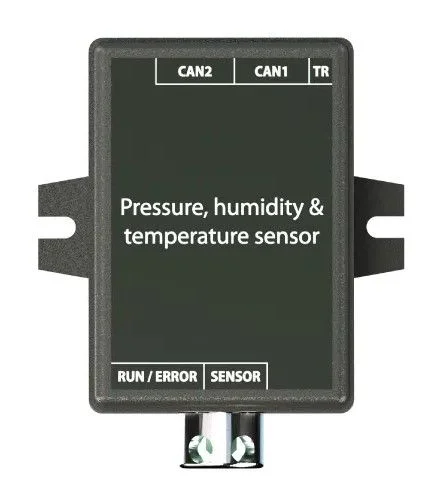
Temperature & Humidity Sensors
Precise measurement for cabinets and industrial racks.
Vibration Sensors
Detect vibrations in machines, racks, and doors.
Magnetic Contact & Motion Sensors
Reliably monitor doors and server cabinets.
Leakage & Water Sensors
Early warning of flooding and condensation.
Smoke Detectors
Real-time detection of fire risks.
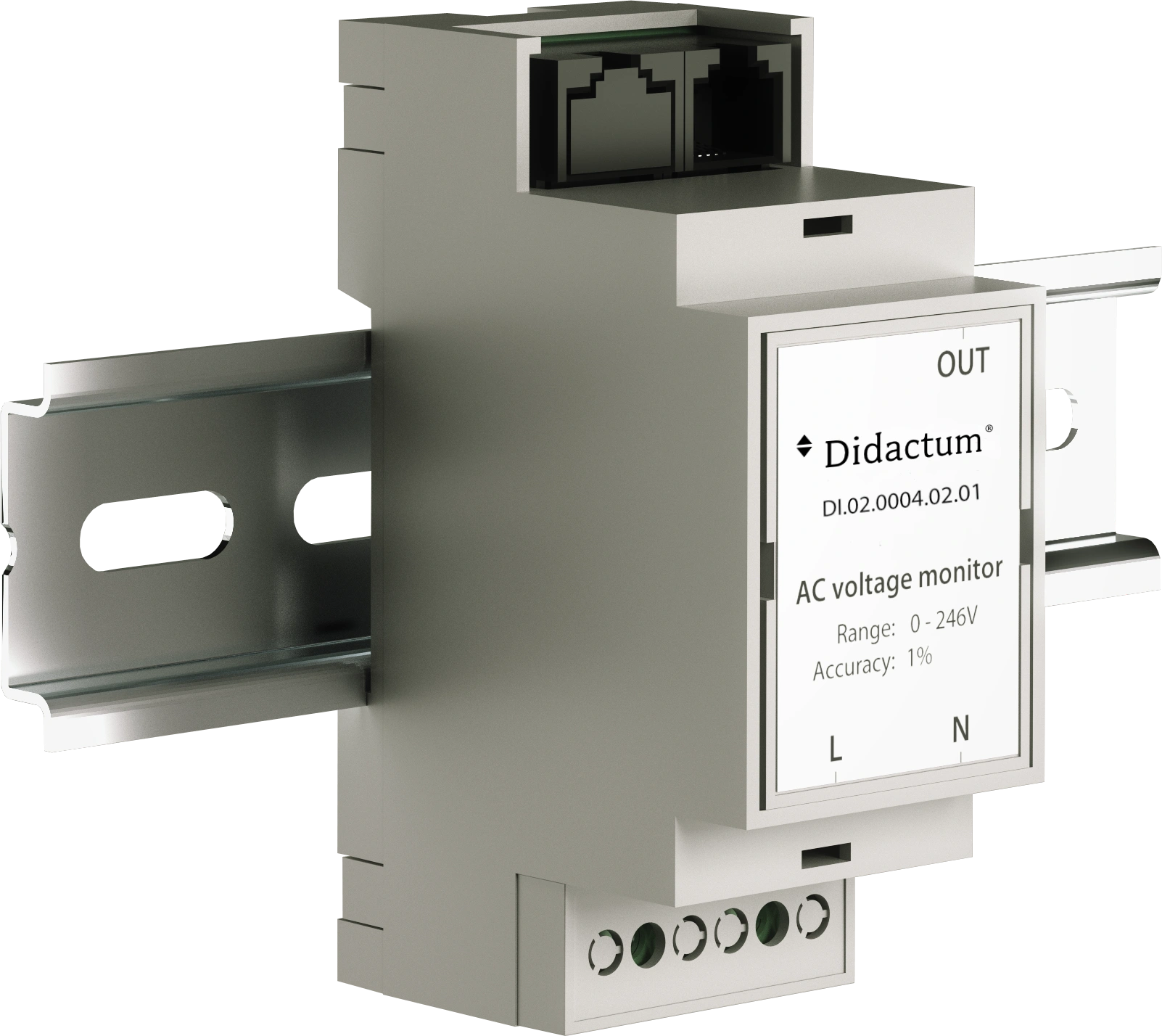
Current & Voltage Sensors
Monitoring of UPS systems, mains voltage, and consumption.
Four analog sensor ports are available directly on the device, automatically detected via AutoSense. This number can be significantly expanded via the CAN bus — ideal for cabinets, industrial racks, and installations with growing sensor requirements.
Real-Time Monitoring and Automated Alerting
The 300T responds immediately to critical values. When threshold values are exceeded, the system automatically sends email notifications, SMS, web-to-SMS, push notifications, or SNMP traps, or activates a siren. Integration with monitoring software such as Zabbix, PRTG, or Nagios is easy thanks to common network protocols (HTTP, HTTPS, SMTP, FTP, SNMP, Syslog, DHCP, Modbus TCP/IP).
Practical example: A temperature sensor in the cabinet reports critical values. The system activates ventilation and warning lights and sends email and SMS to those responsible — preventing overheating damage to equipment at an early stage.
Web-Based Control & Intelligent Automation
The intuitive web interface allows easy management of sensors, alarms, and scenarios.
- Temperature > 30 °C → switch on ventilation, trigger alarm
- Door opening → send SMS to administrator
- Water ingress → activate siren, send email notification
- Vibration on machine or rack → trigger security alarm
The 300T can be used as an I/O DIN controller for doors, fans, generators, UPS systems, and circuit breakers — ideal for cabinet management, industrial automation, and preventive maintenance.
Full Control
Monitor devices, turn sensor data into actionable insights, and configure integrations — all through an intuitive, web-based interface.
- Monitor real-time data from all connected sensors and devices
- Create automated actions based on defined conditions
- Send email, Telegram, HTTP request, SNMP, or other notifications
- Visualize trends and logs for better decision-making
- Securely manage users, permissions, and access
Scalable, Reliable, and Future-Proof
The system supports up to 700 elements (notifications, triggers, timers, logic schemes) and can be easily expanded. Multiple expansion units can be operated in a chain via the CAN bus, with a maximum distance of up to 225 m from the device. Regular firmware updates ensure long-term usability. Made in the EU — German support included.
Connecting CAN Sensors
Multiple CAN devices can be connected in a chain via the CAN bus. Each 8-port sensor expansion adds 8 additional analog sensors to the system. Each dry contact expansion unit adds 32 or 64 additional dry contact inputs. An additional CAN power supply (12V/1A) is only needed if the number of CAN devices in the chain exceeds 12.
Individually Expandable with Expansion Module & Modem
The Monitoring System 300T offers two internal slots that allow the device to be precisely tailored to your requirements.
Please note: The options listed below are not automatically included in the scope of delivery. They must be selected additionally and separately above the add-to-cart button ("Select expansion module" and "Select modem") so that the desired module or modem is included and installed in the device.
Expansion Module for OSDPv2 Reader
Enables the connection of OSDPv2-capable card readers for access control directly on the device.
Expansion Module for Modbus/RTU
Integrates Modbus/RTU-capable devices, meters, and counters into the Monitoring System 300T.
No Expansion Module
Default selection if no OSDPv2 or Modbus/RTU module is required. Note: Only one of the two modules can be installed in the device at a time.
LTE Modem
Enables independent remote connectivity and alerting via mobile network (incl. web-to-SMS), even without a fixed IP network. Fits into the dedicated modem slot.
No Modem
Default selection if the device is to be operated exclusively via Ethernet.
Access Monitoring, Video & Physical Security
The 300T also protects cabinets and technical rooms against unauthorized access and tampering.
- Magnetic contacts detect unauthorized opening of cabinets and doors
- Motion detectors secure technical rooms
- Vibration sensors detect tampering attempts on equipment
- Up to 4 IP cameras or one USB camera for visual monitoring
- OSDPv2 card reader for access control (optional expansion module)
All sensor and alarm data is also logged with a timestamp, supporting companies with ISO 27001, GDPR, or industry-specific audits.
Commissioning in a Few Minutes
Setup is simple and quick — no additional software required.
- Clip the device onto the DIN rail in the cabinet and connect it to your network via an Ethernet cable
- Connect the included 12V DC power supply — the system starts automatically
- Open the default IP address of the device (see quick start guide) in your browser
- Complete the setup wizard for network settings, admin password, and time zone
- Connect sensors to the analog ports — they are detected automatically (AutoSense)
- Optional: install expansion module (OSDPv2/Modbus RTU) or LTE modem and configure it in the web interface
- Optional: configure alarm rules and advanced settings
What's Included
Please check the scope of delivery for completeness upon receipt and report any missing or damaged parts to your supplier immediately. Additionally ordered options (expansion module, modem) are not included and are shipped separately.
- Didactum 300T Monitoring Unit1 piece
- DIN Rail Mount1 piece
- Power Adapter 12V DC / 1A, 5.5 × 2.1 mm1 piece
- RJ-45 Ethernet Cable, 3 m1 piece
- OTG USB Cable1 piece
- Terminal Block, 10-pin, 3.81 mm1 piece
- Terminal Block, 6-pin, 3.50 mm2 pieces
- Terminal Block, 3-pin, 3.50 mm1 piece
- Terminal Block, 3-pin, 3.81 mm1 piece
- Terminal Block, 5.08 mm1 piece
- Quick Start Guide1 piece
Why the 300T Is the Right Choice
Built for DIN Rail
Compact mounting in cabinets and industrial racks.
Up to 100 Sensors
Temperature, humidity, smoke, leakage, vibration, power, access.
Real-Time Alerting
Via email, SMS, SNMP trap, Syslog, web-to-SMS, or push.
Web-Based
Compatible with Zabbix, PRTG, and Nagios, no additional software required.
I/O DIN Controller
8 potential-free inputs, 2 relay outputs for doors, fans, UPS.
Scalable
Up to 700 elements — notifications, triggers, logic schemes.
Expansion Modules
Optional OSDPv2 reader or Modbus/RTU integration.
Redundant Power Supply
12V DC main input plus 12V and 24–48V DC backup.
Made in EU
German support included, regular firmware updates.
Practical Application Examples
- Environmental monitoring in cabinets, distribution rooms, and industrial racks
- I/O control of fans, generators, UPS systems, and circuit breakers
- Leak detection under raised floors or on air conditioning and cooling systems
- Production halls and industrial facilities: machine, fan, and voltage monitoring
- Access and door monitoring for server cabinets and technical rooms
- Integration of Modbus/RTU devices into existing automation environments
- Event logging and predictive maintenance
- Remote monitoring of branch locations via LTE modem
The Didactum Monitoring System 300T combines IP-based monitoring, I/O control, and alarm management in a scalable DIN-rail platform — for early detection of hazards, fewer failures, and maximum equipment availability.
More About the Didactum 300T
Device Detail Page & Tutorial
Overview of the device, detailed dimensions, and all connections explained individually.
Go to Detail Page →Firmware & Updates
Current firmware versions plus instructions for updating and recovery.
Go to Firmware Page →Live Demo
Try out the web interface of the Didactum Monitoring System online, no obligation.
Go to Demo →Frequently Asked Questions
What is the Didactum Monitoring System 300T and what is it used for?
The Didactum Monitoring System 300T is a DIN-rail monitoring and control unit designed for industrial facilities, electrical installations, and cabinets. It monitors environmental parameters such as temperature, humidity, voltage, leaks, smoke, and vibration, while also functioning as an I/O DIN controller for controlling doors, fans, generators, UPS systems, and circuit breakers.
How does the 300T differ from other Didactum monitoring systems such as the 100T?
While the Monitoring System 100T is a desktop device in a metal housing designed for server rooms, the 300T was specifically developed for DIN-rail mounting in cabinets and industrial installations. It additionally offers 8 instead of 4 potential-free inputs as well as staggered 12V and 24–48V DC power inputs for redundant power supply, but comes housed in a lighter plastic enclosure.
Which sensors can be connected to the system?
The Monitoring System 300T has 4 analog sensor ports directly on the device as well as 8 potential-free inputs, and can be expanded via the CAN bus by up to 32 additional devices — including temperature, humidity, smoke, PIR motion, door, vibration, water, and voltage sensors. In total, up to 100 physical sensors, contacts, and relays can be managed simultaneously.
What about the expansion module and the modem? Are they included in the price?
No. The expansion module (OSDPv2 reader or Modbus/RTU) and the optional LTE modem are not standard components of the scope of delivery. Both options must be explicitly selected during the ordering process above the add-to-cart button under "Select expansion module" and "Select modem" so that they are included and installed in the device. Only one of the two expansion modules (OSDPv2 or Modbus/RTU) can be installed in the device at a time.
How are alarms and notifications sent?
The system offers various alerting methods: email notifications to up to 20 recipients, SMS or web-to-SMS (optional via LTE modem), SNMP traps for network management systems, syslog messages, FTP transfer, and push notifications. In addition, external sirens or strobe lights can be connected via the relay outputs.
Can the system be integrated into existing IT and automation infrastructures?
Yes. The system supports SNMP v1/v2c/v3, Modbus TCP/IP, and — via the optional expansion module — Modbus RTU, and can be integrated into common monitoring platforms such as Nagios, PRTG, Zabbix, or Check_MK. It connects via Ethernet and can be managed both through the web interface and via network management tools.
How is the system initially connected and commissioned?
Clip the device onto the DIN rail in the cabinet, connect it to your network via Ethernet, and connect the included 12V DC power supply. The system starts automatically and can be accessed via a web browser at the default IP address listed in the quick start guide. The setup wizard guides you through the basic configuration (network settings, admin password, time zone). Sensors are detected automatically as soon as they are connected to the analog ports. The "Didactum Manager" helps with advanced configuration and setting up alarm rules.
Can the system be expanded if I need more sensors?
Yes. CAN expansion units can significantly increase the number of sensors: each 8-port sensor expansion unit adds 8 additional analog sensors, and each dry contact expansion unit adds 32 or 64 additional dry contact inputs. The maximum distance of CAN devices from the device is up to 225 m. An additional CAN power supply is only needed once more than 12 CAN devices are operated in the chain.
What power supply does the system need and how failsafe is it?
The Monitoring System 300T is powered via a 12V DC main input and additionally features two separate backup power inputs — 12V DC and 24–48V DC — for redundant power supply with voltage reservation. An integrated watchdog ensures automatic restarts in the event of system errors, and all events are logged.
Questions About the 300T?
Our support team in Germany will be happy to advise you free of charge on selection, options, setup, and sensors.
Schnelleinstieg Monitoring System 300T
Device Management:
- Device Management: Web, SNMP
- Sensor Access: Three-level via login
Interface:
- LAN: Ethernet 100 Mbit
- Operating System: Linux v.6.2
- Interface: Any browser
- Memory (RAM): 128 MB
- CPU Speed: 720 MHz
- Total CPU Cores: 2
- Clock: Built-in clock
- Timer: Built-in watchdog
Sensor Technology and Logic:
- Max. Number of Sensors: 100 (physical sensors, dry contacts, relays)
- Max. Number of Elements: 700 (notifications, triggers, timers, logic, sensors, etc.)
Network / Protocol Support:
- LTE Gateway Mode: Yes
- LTE Access Mode: Yes
- Network Protocols: DHCP, HTTP, HTTPS, SNMP, SMTP, FTP, Syslog, TLS
- Modbus RTU: With VT485m expansion
- Modbus TCP/IP: Yes
- VPN: Secure data transmission: Yes
Power Supply:
- Energy Efficiency (EU Energy Level): Grade A
- Power Input (230V AC): No
- Power Input (24–48V DC): Yes
- Power Input (12V DC): Two inputs
- Min. Power Consumption: 1 W
- Max. Power Consumption: 10 W
Inputs/Outputs:
- Analog Port: 4 built-in ports (6P6C for connecting analog sensors)
- CAN Port: 1 port, max. 32 devices
- Dry Contact Inputs: 8
- Relay Outputs (240V / 10A): No
- Relay Outputs (12V / 0.25A): 2
Video Support:
- USB Cameras: 1
- IP Cameras: up to 4
Environmental Conditions:
- Operating Temperature: -10 to +70 °C
- Storage Temperature: -25 to +85 °C
- Operating Humidity: 0 to 90% (non-condensing)
Mechanics and Enclosure:
- Installation: Desktop
- Enclosure Material: Plastic
- Dimensions (L x W x H): 212.5 x 90.1 x 32.2 mm
- Weight: 0.5 kg
Suitable extension units


Suitable sensors


Current Measurement via Hall Effect Current Transformer Directly in the Monitoring System The Didactum current transformer transmits the current values measured by a Hall effect current transformer to a Didactum monitoring system. This analog plug-and-play converter is connected to any analog port (A1 to A8) of a Didactum monitoring system or expansion unit and works with Hall effect current transformers with a 0–5V output signal and 12V DC power supply. This article describes both available variants of the current transformer together: the AC variant for AC measurements and the DC variant for DC measurements. Both variants are identical in design, connection, and functionality, but differ in the type of external Hall effect current transformer they work with. The choice between AC and DC is made directly during the ordering process via the variant selection on this product page. Configuration Individually configurable: AC or DC The Didactum current transformer is already tailored during the ordering process to match the type of Hall effect current transformer already in use or planned. ⚠️ Please note: The correct variant must be actively selected above the shopping cart button under “Select variant”. The AC variant works only together with an AC Hall effect current transformer, while the DC variant works only together with a DC Hall effect current transformer. An incorrect combination will not provide correct measurement values. Select variant AC For monitoring AC current meters. Suitable for use with AC Hall effect current transformers for measuring alternating current. DC For monitoring DC current meters. Suitable for use with DC Hall effect current transformers for measuring direct current. Both variants are identical in connection, structure, and function; details can be found in the “Structure” section below. Structure Current transformer connections The current transformer has only a few, clearly separated connections for input, output, and the external current transformer. 1 Input: 3-pin terminal block 2.54 mm pitch. The external Hall effect current transformer is connected here using 3 wires (0–5V signal and 12V DC power supply). 2 Output: RJ11 6P4C Connects the current transformer via RJ11 cable to an analog port (A1 to A8) of the Didactum monitoring system or a VT408 expansion unit. The 12V DC power supply for the external Hall effect current transformer is provided by the Didactum monitoring system via the analog port and passed through by the current transformer to the current transformer sensor. A separate power supply for the current transformer sensor is not required. Required components Matching Hall effect current transformer required The Didactum current transformer cannot be operated on its own. It absolutely requires an external Hall effect current transformer with 0–5V output and 12V DC supply, which performs the actual current measurement on the line. HALL AC current transformer Open AC current transformer for alternating current, available for measurement ranges from 5 to 50 A. AC current transformer AC current transformer for higher alternating currents, available for measurement ranges from 50 to 500 A. DC current transformer DC current transformer for direct current, available for measurement ranges from 50 to 500 A. Alternatively, any other commercially available Hall effect current transformer with a suitable 0–5V output signal and 12V DC supply can also be used. Installation Install current transformer and sensor together The current transformer sensor and Didactum current transformer are installed together. 1 Mount the current transformer sensor Secure the Hall effect current transformer with screws and nuts. The line to be measured is guided through the aperture of the current transformer. 2 Connect to the monitoring system Connect one end of the RJ11 cable to a free analog port (A1 to A8) of the Didactum monitoring system and the other end to the RJ11 port of the current transformer. 3 Wire the current transformer sensor Connect the 3 wires to the Hall effect current transformer according to the wiring diagram using the 3-pin terminal block of the current transformer. ⚠️ Safety instructions: Observe the applicable regulations for installation in the respective country as well as the relevant accident prevention regulations, in addition to internal company work, operating, and safety rules. The specified technical limits, especially the permissible ambient temperature range, must not be exceeded under any circumstances. Also check the maximum insulation voltage of the current transformer sensor and the maximum permissible cable diameter of the line to be measured before installation. Web interface Full control over thresholds, trends, and automation The current transformer integrates seamlessly into the Didactum web interface and delivers precise measurement values as well as actionable insights. Individual thresholds (Lower Critical, Lower Warning, Normal, Upper Warning, Upper Critical) per measurement point Logic schemes for automated actions when limit values are exceeded, e.g. in case of overload Clear, individually configurable dashboard Graphical trend display and continuous logging of measurement values Notifications via email, SMS, SNMP trap, and other channels Use cases Areas of application for the current transformer Monitor circuits and outgoing feeders in electrical distribution boards to detect overloads Monitor power consumption of critical IT and facility equipment in the data center Measure generator load and detect over- or underload Monitor input and output current of UPS systems to assess backup performance Monitor motors, pumps, compressors, and production machines for load changes Record charging and discharging currents of battery banks and energy storage systems Check the power yield of solar inverters and other renewable energy systems Detect wear or defects early based on changed current consumption Scope of delivery What is included in the package Please check the contents upon receipt for completeness and report any missing or damaged parts to your supplier immediately. The external Hall effect current transformer (AC or DC) is not included in this scope of delivery and must be ordered separately. Didactum current transformer (AC or DC, depending on the ordering option)1 piece RJ11 cable 6P4C, 2 m1 piece 3-pin terminal block, 2.54 mm1 piece 3-pin terminal block, 3.81 mm1 piece 3-wire connection cable, 2 m1 piece Screw B4.2 x 16 mm1 piece Self-adhesive label1 piece Benefits at a glance Why this current transformer is the right choice High accuracy1% measurement accuracy in signal transmission from the current transformer sensor. AC and DC availableSelect the matching variant for alternating or direct current measurement. Plug and playAutomatic detection at the analog port, no manual setup required. No separate power supplyThe 12V supply for the current transformer sensor is provided directly via the analog port. CompactSmall form factor (80 × 19 × 20 mm), desktop or wall mounting. Long rangeUp to 50 m distance to the monitoring system or expansion unit. ExpandableAdd additional current transformers easily via the VT408 expansion unit. Made in EUDeveloped and manufactured in the European Union. FAQ Frequently asked questions What is the difference between the AC and DC variants? Both variants are identical in connection and function. The AC variant is intended for use with AC Hall effect current transformers for AC measurement, while the DC variant is intended for use with DC Hall effect current transformers for DC measurement. The correct variant is selected during ordering via the options menu. Can I use the AC variant with a DC current transformer sensor? No. The AC variant works only with AC Hall effect current transformers, and the DC variant works only with DC Hall effect current transformers. An incorrect combination will not provide correct measurement values. Is the external Hall effect current transformer included in the package? No. The Didactum current transformer absolutely requires an external Hall effect current transformer with a 0–5V output and 12V DC supply, which must be ordered separately. How is the current transformer connected? The current transformer is connected via RJ11 cable to any analog port (A1 to A8) of the Didactum monitoring system. The external Hall effect current transformer is connected via a 3-wire cable to the 3-pin terminal block of the current transformer. Does the current transformer sensor need its own power supply? No. The 12V DC supply for the current transformer sensor is provided by the Didactum monitoring system via the analog port and passed through by the current transformer. Can the current transformer be operated independently without a monitoring system? No. The current transformer itself provides no display or analysis and must always be used together with a Didactum or Vutlan monitoring system and a suitable external Hall effect current transformer. Questions about the Didactum current transformer? Our support team in Germany will advise you free of charge on selection, installation, and configuration. Contact form (+49) 2501 92 90 160

Precise Probe for DC Current Measurement The Didactum DC current transformer probe is a simple, open-loop Hall-effect DC current transducer that measures direct current on a cable contactlessly, without interrupting it. The cable to be measured is routed through the opening of the ring-shaped transducer; the probe converts the measured DC current into a proportional 0–5V DC output signal. This article refers to the DC-100 model with a rated current of 100A and a measurement range of 0–100 A — ideal for monitoring battery systems, DC busbars, and DC distribution lines. ⚠️ Important note: The Didactum DC current transformer probe measures the current on the cable, but cannot transmit the measured signal to a monitoring system on its own. The Didactum current transducer in the DC version, item no. DI14030-DC, is additionally required as a transceiver. It receives the probe’s 0–5V signal and forwards it via an analog port (A1…A8) to the Didactum monitoring system. Without the DI14030-DC, no display, evaluation, or alarm notification of the measured values is possible. Design Design of the Current Measuring Probe The current measuring probe consists of a ring-shaped transducer head with a pass-through opening and a 4-pin terminal block. 1 Pass-through opening (Ø 21 mm) The DC cable to be measured is routed through this opening in the ring-shaped toroidal transducer core. The probe measures the current contactlessly via the magnetic field generated. 2 Mounting tabs Two mounting tabs on the housing used to secure the probe with screws and nuts. 3 4-pin terminal block (3.81 mm pitch) Four-wire terminal for connection to the Didactum current transducer DI14030-DC. Pin assignment: G (Ground), M (0–5V measurement signal), G (Ground), + (+12V DC supply). Installation Mounting and Connection The current measuring probe and the Didactum current transducer (DI14030-DC) are installed together. 1 Mount the probe Secure the current measuring probe in a suitable location using screws and nuts. Route the DC cable to be measured through the probe’s pass-through opening. 2 Wiring to current transducer DI14030-DC Connect the 4 wires of the terminal block (G, M, G, +) to the 3-pin input terminal of the Didactum current transducer (DI14030-DC, DC version) according to the pin assignment. 3 Connect to the monitoring system Connect the Didactum current transducer (DI14030-DC) via RJ11 cable to a free analog port (A1…A8) of the Didactum monitoring system or an 8-port sensor expansion unit. ⚠️ Safety instructions: Comply with the applicable regulations for installation in the respective country as well as the relevant accident prevention regulations, and also with internal operating, work, and safety rules. The specified technical limits, in particular insulation voltage, pass-through diameter, and ambient temperature range, must under no circumstances be exceeded. Before installation, check the maximum permissible cable diameter and the maximum insulation voltage of the probe. Web interface Full Control over Thresholds, Trends, and Automation Via the Didactum current transducer (DI14030-DC), the probe integrates seamlessly into the Didactum web interface. Individual thresholds (Lower Critical, Lower Warning, Normal, Upper Warning, Upper Critical) for each measuring point Logic schemes for automated actions when limits are exceeded, e.g. in case of overload or deep discharge Clear, individually configurable dashboard Graphical trend display and continuous logging of measured values Notifications by email, SMS, SNMP trap, and additional channels Applications Use Cases for the Current Measuring Probe Monitoring load current on DC Hall probes for battery strings, DC busbars, and distribution lines for remote power consumption monitoring Detecting overload and assessing the condition of DC circuits Monitoring charging and discharging currents in battery banks, UPS systems, and energy storage systems Detecting anomalous current flow to optimize battery lifespan Monitoring telecom rectifiers, DC motors, solar charge controllers, EV charging stations, and industrial DC loads Detecting operating changes, unexpected load fluctuations, and fault conditions in DC systems Scope of delivery What Is Included Please check the contents upon receipt for completeness and report any missing or damaged parts to your supplier immediately. The Didactum current transducer DI14030-DC is not included in this scope of delivery and must be ordered separately. Didactum DC current transformer probe DC-100 (100A)1 piece Self-adhesive label1 piece Screw L18.5 M42 pieces Bolt L14 M42 pieces Nut M3.52 pieces Key benefits Why This Current Measuring Probe Is the Right Choice 100A rated currentMeasurement range 0–100 A for battery systems, DC busbars, and distribution lines. Contactless measurementDetects DC current without disconnecting the cable. High accuracyAccuracy and linearity error of ≤ ±1.0%. Fast response timeResponse time of ≤ 20 ms for timely readings. Easy installationMounted using two tabs with screws and nuts. Robust insulationInsulation voltage AC 2.5 kV 50 Hz 1 min for safe operation. Wide operating rangeDesigned for ambient temperatures from -10 °C to +70 °C. Made in EUDeveloped and manufactured in the European Union. FAQ Frequently Asked Questions What current range is this model suitable for? This model (DC-100) has a rated current of 100A and covers a measurement range of 0–100 A. Make sure the maximum expected operating current of the monitored cable stays safely within this range. Can the current measuring probe be connected directly to the monitoring system? No. The probe provides a 0–5V analog signal and requires the Didactum current transducer in the DC version (DI14030-DC) as a transceiver to transmit this signal to an analog port of the monitoring system. Is DI14030-DC included in the package? No. The Didactum current transducer DI14030-DC is a separate product and must be ordered additionally unless already available. Does the cable need to be cut for installation? No. The current measuring probe measures contactlessly through the magnetic field of the cable routed through the pass-through opening. Cutting the cable is not required for measurement. Can multiple current measuring probes be used at the same time? Yes. Each DC circuit to be monitored requires its own DC-100 current measuring probe with its own Didactum current transducer (DI14030-DC) on a free analog port. If the available ports are not sufficient, the number can be increased using an 8-port sensor expansion unit. Is the probe also suitable for AC measurements? No. The Didactum DC current transformer probe is designed exclusively for direct current (DC). For AC measurements, a separate product is available that is combined with the AC version of the Didactum current transducer. Questions about the Didactum DC current transformer probe? Our support team in Germany will advise you free of charge on selection, installation, and configuration. Contact form (+49) 2501 92 90 160


Precise Hall-Effect Current Transformer for AC Measurement The Didactum AC current transformer is a simple, open-loop Hall-effect AC current transformer (open-loop ammeter) that measures current on a conductor contactlessly without disconnecting it. The conductor to be measured is passed through the opening of the ring-shaped transformer; the transformer converts the measured AC current into a proportional 0–5V DC output signal. This article refers to model AC-100 with a rated current of 100A and a measuring range of 0–100 A — ideal for monitoring individual circuits, feeders, and medium loads. ⚠️ Important note: Although the Didactum AC current transformer measures the current on the conductor, it cannot transmit the measuring signal to a monitoring system on its own. The Didactum current transformer in the AC version, item no. DI14030-AC is additionally required; as a transceiver, it receives the 0–5V signal from the current transformer and forwards it via an analog port (A1…A8) to the Didactum monitoring system. Without the DI14030-AC, no display, evaluation, or alarming of the measured values is possible. Design Current Transformer Design The current transformer consists of a ring-shaped transformer head with a pass-through opening and a 4-pin connection terminal. 1 Pass-through opening (Ø 21 mm) The conductor to be measured is passed through this opening in the ring-shaped, toroidal transformer core. The transformer measures current contactlessly via the magnetic field that is generated. 2 Mounting tabs Two fixing tabs on the housing, used to secure the transformer with screws and nuts. 3 4-pin connection terminal (3.81 mm pitch) Four-pin terminal for wiring to the Didactum current transformer DI14030-AC. Pin assignment: G (Ground), M (0–5V measuring signal), G (Ground), + (+12V DC supply). Installation Mounting and Connection The current transformer and the Didactum current transformer (DI14030-AC) are installed together. 1 Mount the transformer Secure the current transformer in a suitable location using screws and nuts. Route the conductor to be measured through the transformer's pass-through opening. 2 Wiring to current transformer DI14030-AC Connect the 4 wires of the terminal (G, M, G, +) to the 3-pin input terminal of the Didactum current transformer (DI14030-AC, AC version) according to the wiring diagram. 3 Connect to the monitoring system Connect the Didactum current transformer (DI14030-AC) via RJ11 cable to a free analog port (A1…A8) of the Didactum monitoring system or an 8-port sensor expansion unit. ⚠️ Safety instructions: Applicable regulations for installation in the respective country and the relevant accident prevention regulations must be observed, as well as internal operational, working, and safety rules. The specified technical limits, in particular insulation voltage, pass-through diameter, and ambient temperature range, must under no circumstances be exceeded. Before installation, check the maximum permissible conductor diameter as well as the maximum insulation voltage of the transformer. Web interface Full Control of Thresholds, Trends, and Automation Via the Didactum current transformer (DI14030-AC), the current transformer integrates seamlessly into the Didactum web interface. Individual thresholds (Lower Critical, Lower Warning, Normal, Upper Warning, Upper Critical) for each measuring point Logic schemes for automated actions when thresholds are exceeded, e.g. in case of overload Clear, individually configurable dashboard Graphical trend display and continuous logging of measured values Notifications via email, SMS, SNMP trap, and other channels Applications Current Transformer Use Cases Monitor circuits and feeders in electrical distribution boards to detect overloads. Monitor the power consumption of critical IT and facility equipment in the data center. Monitor motors, pumps, compressors, and production machines for load changes. Measure generator load and detect over- or underload. Monitor input and output current of UPS systems to assess backup performance. Check the power output of solar inverters and other renewable energy systems. Automated alarming when defined current limits are exceeded. Early detection of wear or defects based on changes in current draw. Scope of delivery What Is Included Please check the scope of delivery for completeness upon receipt and report any missing or damaged parts to your supplier immediately. The Didactum current transformer DI14030-AC is not included in this scope of delivery and must be ordered separately. Didactum AC current transformer AC-100 (100A)1 pc Self-adhesive label1 pc Screw L18.5 M42 pcs Bolt L14 M42 pcs Nut M3.52 pcs Key benefits Why This Current Transformer Is the Right```xml Precision Hall-Effect Current Transducer for AC Measurement The Didactum AC current transducer is a simple, open-loop Hall-effect AC current transducer (open-loop ammeter) that measures the current on a line contactlessly without opening the circuit. The cable to be measured is passed through the opening of the ring-shaped transducer; the transducer converts the measured AC current into a proportional 0–5V DC output signal. This article refers to the AC-100 model with a rated current of 100A and a measurement range of 0–100 A — ideal for monitoring individual circuits, feeders, and medium loads. ⚠️ Important note: Although the Didactum AC current transducer measures the current on the line, it cannot transmit the measurement signal to a monitoring system by itself. The additionally required component is the Didactum current transducer in the AC version, part no. DI14030-AC, which acts as a transceiver, receives the 0–5V signal from the current transducer, and forwards it to the Didactum monitoring system via an analog port (A1…A8). Without the DI14030-AC, no display, analysis, or alarm notification of the measured values is possible. Design Design of the Current Transducer The current transducer consists of a ring-shaped transducer head with a passage opening and a 4-pin connection terminal. 1 Passage opening (Ø 21 mm) The cable to be measured is routed through this opening in the ring-shaped toroidal transducer core. The transducer measures the current contactlessly via the magnetic field generated. 2 Mounting tabs Two mounting tabs on the housing used to secure the transducer with screws and nuts. 3 4-pin connection terminal (3.81 mm pitch) Four-pole terminal block for wiring to the Didactum current transducer DI14030-AC. Pin assignment: G (Ground), M (0–5V measurement signal), G (Ground), + (+12V DC supply). Installation Mounting and Connection The current transducer and the Didactum current transducer (DI14030-AC) are installed together. 1 Mount the transducer Secure the current transducer in a suitable location using screws and nuts. Route the cable to be measured through the transducer's passage opening. 2 Wiring to the DI14030-AC current transducer Connect the 4 wires of the connection terminal (G, M, G, +) to the 3-pin input terminal of the Didactum current transducer (DI14030-AC, AC version) according to the wiring assignment. 3 Connect to the monitoring system Connect the Didactum current transducer (DI14030-AC) via RJ11 cable to a free analog port (A1…A8) of the Didactum monitoring system or an 8-port sensor expansion unit. ⚠️ Safety instructions: Comply with the applicable installation regulations in the respective country as well as the relevant accident prevention regulations, together with internal company work, operating, and safety rules. The specified technical limits, especially insulation voltage, passage diameter, and ambient temperature range, must under no circumstances be exceeded. Before installation, check the maximum permissible cable diameter and the maximum insulation voltage of the transducer. Web interface Full Control of Thresholds, Trends, and Automation Via the Didactum current transducer (DI14030-AC), the current transducer integrates seamlessly into the Didactum web interface. Individual thresholds (Lower Critical, Lower Warning, Normal, Upper Warning, Upper Critical) per measurement point Logic schemes for automated actions when limit values are exceeded, e.g. in case of overload Clear, individually configurable dashboard Graphical trend display and continuous logging of measured values Notifications via email, SMS, SNMP trap, and other channels Applications Use Cases for the Current Transducer Monitor circuits and feeders in electrical distribution panels to detect overloads Monitor the power consumption of critical IT and facility equipment in data centers Monitor motors, pumps, compressors, and production machines for load changes Measure generator load and detect overloading or underloading Monitor the input and output current of UPS systems to assess backup performance Check the output of solar inverters and other renewable energy systems Automatic alarm notification when defined current limits are exceeded Early detection of wear or faults based on changes in current draw Scope of delivery What Is Included in the Package Please check the contents of the package upon receipt for completeness and report any missing or damaged parts to your supplier immediately. The Didactum current transducer DI14030-AC is not included in this scope of delivery and must be ordered separately. Didactum AC current transducer AC-100 (100A)1 piece Self-adhesive label1 piece Screw L18.5 M42 pieces Bolt L14 M42 pieces Nut M3.52 pieces Key benefits Why This Current Transducer Is the Right Choice 100A rated currentMeasurement range 0–100 A for circuits and medium loads. Contactless measurementCurrent detection without opening the cable. High accuracy≤ ±1.0 % accuracy and linearity error. Easy installationMounting via two tabs with screws and nuts. Robust insulationInsulation voltage AC 2.5 kV 50 Hz 1 min for safe operation. Wide operating rangeDesigned for ambient temperatures from -10 °C to +70 °C. Standardized output0–5V DC signal, compatible with the Didactum current transducer DI14030-AC. Made in the EUDeveloped and manufactured in the European Union. FAQ Frequently Asked Questions Which current range is this model suitable for? This model (AC-100) has a rated current of 100A and covers a measurement range of 0–100 A. Make sure the maximum expected operating current of the monitored cable stays safely within this range. Can the current transducer be connected directly to the monitoring system? No. The current transducer provides a 0–5V analog signal and requires the Didactum current transducer in the AC version (DI14030-AC) as a transceiver to pass this signal to an analog port of the monitoring system. Is DI14030-AC included in the scope of delivery? No. The Didactum current transducer DI14030-AC is a separate product and must be ordered additionally if it is not already available. Does the cable need to be cut for installation? No. The current transducer measures contactlessly via the magnetic field of the cable routed through the passage opening. Cutting the cable is not required for measurement. Can multiple current transducers be used at the same time? Yes. Each monitored circuit requires its own AC-100 current transducer with its own Didactum current transducer (DI14030-AC) on a free analog port. If the available ports are not sufficient, the number can be expanded using an 8-port extension unit. Is the transducer also suitable for DC measurements? No. The Didactum AC current transducer is designed exclusively for alternating current (AC). For DC measurements, a separate product is available that is combined with the DC version of the Didactum current transducer. Questions about the Didactum AC current transducer? Our support team in Germany will advise you free of charge on selection, installation, and configuration. Contact form (+49) 2501 92 90 160

Compact Hall Effect Probe for Smaller AC Circuits The Didactum Small AC Current Transformer probe is a simple open-loop Hall effect AC current transducer (open-loop ammeter) in a particularly compact design that measures current on a conductor contactlessly without disconnecting it. The cable to be measured is passed through the opening of the ring-shaped transducer; the probe converts the measured AC current into a proportional 0–5 V DC output signal. This article refers to the AC-50 model with a rated current of 50 A and a measuring range of 0–50 A — ideal for individual circuits, outgoing feeders, and smaller to medium-sized loads. ⚠️ Important note: The Didactum Small AC Current Transformer probe measures the current on the conductor, but it cannot transmit the measurement signal to a monitoring system on its own. You also need the Didactum AC Current Transformer, part no. DI14030-AC, which acts as a transceiver, receives the probe’s 0–5 V signal, and forwards it via an analog port (A1…A8) to the Didactum monitoring system. Without the DI14030-AC, no display, analysis, or alarm notification of the measured values is possible. Design Current Probe Design The current probe consists of a compact ring-shaped transducer head with a pass-through opening and a 3-pin connection terminal. 1 Pass-through opening The cable to be measured is routed through the opening in the ring-shaped compact transducer core. The probe measures the current contactlessly via the magnetic field that is generated. 2 Mounting tabs Two mounting tabs on the housing used to secure the probe with screws and nuts. 3 3-pin connection terminal (pitch 3.81 mm) Three-pin terminal for wiring to the Didactum AC Current Transformer DI14030-AC. Pin assignment: + (+12 V DC supply), G (Ground), M (0–5 V measurement signal). ℹ️ Note on confusion: The AC-50 probe has a 3-pin terminal (+, G, M). The larger K6A model for higher currents uses a 4-pin terminal (G, M, G, +). When connecting, make sure the wires are assigned correctly according to the terminal labeling. Installation Mounting and Connection The current probe and the Didactum AC Current Transformer (DI14030-AC) are installed together. 1 Mount the probe Secure the current probe in a suitable location with screws and nuts. Route the cable to be measured through the probe’s pass-through opening. 2 Wiring to current transformer DI14030-AC Connect the 3 wires of the terminal (+, G, M) to the 3-pin input terminal of the Didactum AC Current Transformer (DI14030-AC) according to the wiring assignment. 3 Connect to the monitoring system Connect the Didactum AC Current Transformer (DI14030-AC) to a free analog port (A1…A8) of the Didactum monitoring system or an 8-port sensor expansion unit using an RJ11 cable. ⚠️ Safety instructions: The regulations applicable to installation in the respective country and the relevant accident prevention regulations must be observed, as well as internal company work, operating, and safety regulations. The specified technical limits, especially insulation voltage and ambient temperature range, must under no circumstances be exceeded. Before installation, check the maximum permissible conductor diameter and the maximum insulation voltage of the probe. Web interface Full Control over Thresholds, Trends, and Automation Via the Didactum AC Current Transformer (DI14030-AC), the probe integrates seamlessly into the Didactum web interface. Individual thresholds (Lower Critical, Lower Warning, Normal, Upper Warning, Upper Critical) for each measurement point Logic schemes for automated actions when limit values are exceeded, e.g. in case of overload Clear, individually configurable dashboard Graphical trend display and continuous logging of measured values Notifications via email, SMS, SNMP trap, and other channels Application examples Use Cases for the Current Probe Monitoring circuits and feeders in electrical distribution panels to detect overloads Monitoring motors, pumps, compressors, and production machines for load changes Automatic alarm notifications when defined current limits are exceeded to prevent equipment damage and power outages Monitoring the power consumption of smaller IT and facility devices in the data center Early detection of wear or defects based on changes in current consumption Complementing existing monitoring environments (Zabbix, PRTG, Nagios) Scope of delivery What Is Included Please check the delivery for completeness upon receipt and report any missing or damaged parts to your supplier immediately. The Didactum AC Current Transformer DI14030-AC is not part of this scope of delivery and must be ordered separately. Didactum Small AC Current Transformer probe AC-50 (50 A)1 piece Self-adhesive label1 piece Screw L18.5 M42 pieces Bolt L14 M42 pieces Nut M3.52 pieces Key benefits Why This Current Probe Is the Right Choice 50 A rated currentMeasuring range 0–50 A for circuits and smaller to medium-sized loads. Compact designEspecially space-saving, ideal for tight control cabinets and distribution panels. Contactless measurementCurrent detection without disconnecting the conductor. High accuracy0.5% accuracy and linearity error. Easy installationMounting via two tabs with screws and nuts. Robust insulationInsulation voltage AC 2.5 kV 50 Hz 1 min for safe operation. Wide operating rangeDesigned for ambient temperatures from -10 °C to +70 °C. Made in EUDeveloped and manufactured in the European Union. FAQ Frequently Asked Questions For which current range is this model suitable? This model (AC-50) has a rated current of 50 A and covers a measuring range of 0–60 Aac. Make sure the maximum expected operating current of the conductor being monitored stays safely within this range. How does this probe differ from the larger K6A probe? The AC-50 probe is more compact and uses a 3-pin terminal (+, G, M), while the K6A probe for higher currents uses a 4-pin terminal (G, M, G, +). Both probes require the Didactum current transformer (AC version) as the transceiver to the monitoring system. Can the current probe be connected directly to the monitoring system? No. The probe outputs a 0–5 V analog signal and absolutely requires the Didactum AC Current Transformer (DI14030-AC) as a transceiver, which transfers this signal to an analog port of the monitoring system. Is the DI14030-AC included in the scope of delivery? No. The Didactum AC Current Transformer DI14030-AC is a separate product and must be ordered additionally if not already available. Does the conductor have to be cut open for installation? No. The current probe measures contactlessly via the magnetic field of the conductor routed through the pass-through opening. Cutting the conductor is not necessary for the measurement itself. Can multiple current probes be used at the same time? Yes. Each circuit to be monitored requires its own AC-50 current probe with its own Didactum AC Current Transformer (DI14030-AC) connected to a free analog port. If the available ports are not sufficient, the number can be expanded using a VT408 expansion unit. Questions about the Didactum Small AC Current Transformer probe? Our support team in Germany will advise you free of charge on selection, installation, and configuration. Contact form (+49) 2501 92 90 160




Suitable software

Warranty extension

Suitable CAN sensors


Manufacturer information:
Didactum® Security GmbH
Im Mühlenfeld 4
48163 Münster
Deutschland
Fon:
(+49) 250 19 71 63 54 / (+49) 171 33 11 577
Email: info@didactum-security.de

