DIN sensor expansion unit for 8 sensors


€240.00
8 additional analog sensor ports directly in the control cabinet
The Didactum DIN sensor expansion unit for 8 sensors is the ideal solution for modern monitoring systems in industrial environments. With this CAN bus expansion module, the number of analog sensors in any Didactum monitoring system can be flexibly and modularly increased. Each unit adds eight additional analog sensor ports and thus enables efficient, scalable remote monitoring of industrial systems, data centers, and critical infrastructure.
In contrast to the classic sensor expansion unit, this variant is specially designed for direct mounting on a DIN top‑hat rail in control cabinets and distribution cabinets – optionally with 7 mm or 15 mm installation depth. The device is connected to the CAN port of the Didactum monitoring system via an RJ11/RJ12 cable and uses proven CAN bus technology, allowing up to 24 DIN expansion units to be linked in one chain.
After connection, all sensors are automatically detected by the system and integrated into the central monitoring – regardless of whether they are connected directly to the main unit or to an expansion unit. This greatly simplifies commissioning and minimizes potential errors during installation.
Typical application scenarios
The DIN sensor expansion unit is suitable for demanding industrial environments where sensors are to be connected directly inside the control cabinet.
Production facilities & industry
Modular sensor expansion for production plants and process monitoring.
Power supply systems
Space‑saving installation in control cabinets of critical energy infrastructure.
Server rooms & data centers
Extension of existing monitoring installations without replacing the base unit.
Distribution cabinets
Direct sensor connection exactly where the cabling already comes together.
What distinguishes the DIN sensor expansion unit
Modular, cascadable CAN bus expansion for space‑saving integration of analog sensors directly in the control cabinet.
+8 sensor ports
Each unit immediately extends the system by 8 additional analog sensor ports.
Built for the DIN rail
Compact housing for direct, space‑saving mounting in control and distribution cabinets.
Automatic detection
Connected sensors are automatically detected after connection and integrated into the system.
Daisy‑chain capable
Up to 24 units per CAN bus line – equivalent to up to 192 additional sensor ports.
Long range
Up to 225 m CAN bus length, sensor cables can be routed 50–150 m depending on sensor type.
Flexible mounting
In addition to classic DIN mounting, wall or 19" rack installation is also possible.
Compatible with all CAN‑capable systems
Can be used with any Didactum monitoring system that has a CAN bus port, such as 50T, 100T, 300T, 500T and 550T.
Central management
All sensors – whether on the main unit or on the expansion unit – are configured centrally via the web interface.
Benefits of the DIN sensor expansion units
Integrating a DIN sensor expansion unit offers numerous benefits for operators of industrial systems and data centers. One of the most important aspects is high scalability: by simply adding further sensor expansion modules, the monitoring system can be adapted to growing requirements at any time. The modular sensor expansion ensures that new monitoring requirements can be met flexibly without having to replace existing systems.
Another benefit is the central management of all connected sensors. Via the intuitive user interface of the monitoring system, all sensors – regardless of whether they are connected directly to the main device or to a sensor expansion unit – can be configured and monitored centrally. This saves time and significantly reduces the effort required for maintenance and servicing.
Scalability in detail
Using proven CAN bus technology, multiple DIN sensor expansion units and other CAN‑capable devices and sensors can be combined in one chain. If no other CAN devices are installed in the same chain, up to 24 DIN sensor expansion units can be operated on a single CAN bus line – corresponding to up to 192 additional analog sensor ports on a single monitoring unit. In general, 10–32 CAN devices can be combined on one CAN bus line, depending on cable length, signal quality, and power supply.
Note: An additional CAN 12V 1A power supply is only required if the number of CAN devices in the CAN bus chain exceeds 12 units.
Flexible power supply
In general, the DIN sensor expansion unit requires an external 12V DC power supply, especially when several expansion modules or many sensors are connected. For short cable distances and only one connected expansion unit, operation without a separate power supply may be possible. The power supply is designed so that stable operation is ensured even in modular sensor expansions with many connected sensors.
Flexible mounting options
Thanks to its well‑thought‑out design, installation is highly flexible and can be adapted to different locations.
DIN rail mounting
Direct mounting on the top‑hat rail, optionally with 7 mm or 15 mm installation depth – the classic installation method for this unit.
Wall mounting
Alternative mounting on a wall or surface using suitable mounting accessories.
19" rack mounting
Integration into a 19" server rack using appropriate rackmount accessories.
What is included in the delivery
Please check the scope of delivery on receipt for completeness and report missing or damaged parts to your supplier immediately.
- DIN sensor expansion unit (8x analog)1 piece
- RJ11/RJ12 connection cable (CAN)1 piece
- Quick start guide1 piece
Mounting accessories for wall or 19" rack installation as well as an additional CAN 12V 1A power supply are optional accessories and not included in the delivery.
Typical application scenarios
- Expansion of a Didactum monitoring system with additional temperature and humidity sensors
- Connection of additional smoke detectors, water leakage sensors, and door contacts in control cabinets
- Modular sensor expansion in production facilities and power supply systems
- Retrofitting of existing monitoring installations without replacing the base unit
- Space‑saving installation in distribution cabinets of critical infrastructure
- Building large, modular sensor networks via daisy chain over the CAN bus
- Remote monitoring of industrial systems with automation of relays and alarms
- Central management of distributed sensor points via a single monitoring system
With the Didactum DIN sensor expansion unit, a powerful, flexible, and future‑proof platform for remote monitoring and protection of industrial systems is created. Easy installation, high scalability, and central management make this sensor expansion module the first choice for demanding monitoring tasks in industrial environments.
More about the DIN sensor expansion unit
Device detail page & tutorial
Overview of the device, connection diagram, scalability, and all technical data in detail.
Go to detail page →Frequently asked questions
What is the DIN sensor expansion unit and what is it used for?
It is a CAN bus expansion for the DIN rail that increases the number of analog sensors that can be connected to a Didactum monitoring system by 8 ports each. It is required when the fixed sensor ports of a monitoring system are not sufficient and additional temperature, humidity, smoke, water leakage, or door contact sensors are to be connected directly in the control cabinet.
How does the DIN variant differ from the standard expansion unit for sensors 8x analog?
Both units each provide 8 additional analog sensor ports via CAN bus and share the same electronics. The DIN variant is specifically designed for direct mounting on a DIN rail (7 mm or 15 mm installation depth) in control cabinets and is therefore slightly lighter (approx. 0.33 kg), but can also be mounted on a wall or in a 19" rack if required.
Which Didactum monitoring systems is the expansion unit compatible with?
The DIN sensor expansion unit is compatible with all Didactum monitoring systems that have a CAN bus port, including models 50T, 100T, 300T, 500T, and 550T.
How many expansion units can I connect to one monitoring system?
If no other CAN devices are installed in the same chain, up to 24 DIN sensor expansion units can be operated on a single CAN bus line, corresponding to up to 192 additional analog sensor ports. In general, 10–32 CAN devices can be combined on one CAN bus line; the exact limit depends on cable length, signal quality, and power supply.
Do I need an additional power supply for the expansion unit?
For short cable distances and only one connected expansion unit, operation without a separate power supply may be possible. In all other cases, an external 12V DC power supply is required. If the number of CAN devices in the chain exceeds 12 units, the CAN 12V 1A power supply is additionally required to stabilize the power supply.
Which mounting options are available for the expansion unit?
In addition to classic DIN rail mounting (7 mm or 15 mm installation depth), the unit can also be installed on a wall or in a 19" server rack. The corresponding mounting accessories are available separately.
Questions about the DIN sensor expansion unit?
Our support team in Germany will advise you free of charge on selection, scalability, installation, and compatibility.
Suitable monitoring systems


Suitable CAN sensors

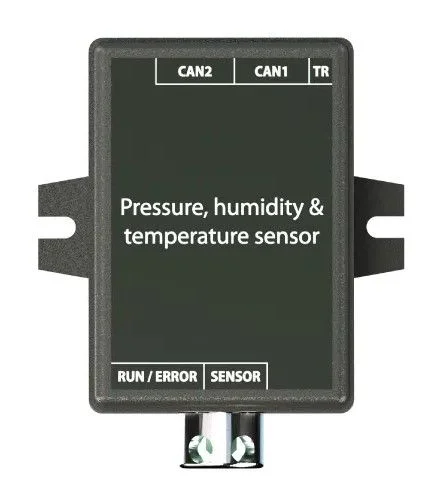

Matching sensors


Current Measurement via Hall Effect Current Transformer Directly in the Monitoring System The Didactum current transformer transmits the current values measured by a Hall effect current transformer to a Didactum monitoring system. This analog plug-and-play converter is connected to any analog port (A1 to A8) of a Didactum monitoring system or expansion unit and works with Hall effect current transformers with a 0–5V output signal and 12V DC power supply. This article describes both available variants of the current transformer together: the AC variant for AC measurements and the DC variant for DC measurements. Both variants are identical in design, connection, and functionality, but differ in the type of external Hall effect current transformer they work with. The choice between AC and DC is made directly during the ordering process via the variant selection on this product page. Configuration Individually configurable: AC or DC The Didactum current transformer is already tailored during the ordering process to match the type of Hall effect current transformer already in use or planned. ⚠️ Please note: The correct variant must be actively selected above the shopping cart button under “Select variant”. The AC variant works only together with an AC Hall effect current transformer, while the DC variant works only together with a DC Hall effect current transformer. An incorrect combination will not provide correct measurement values. Select variant AC For monitoring AC current meters. Suitable for use with AC Hall effect current transformers for measuring alternating current. DC For monitoring DC current meters. Suitable for use with DC Hall effect current transformers for measuring direct current. Both variants are identical in connection, structure, and function; details can be found in the “Structure” section below. Structure Current transformer connections The current transformer has only a few, clearly separated connections for input, output, and the external current transformer. 1 Input: 3-pin terminal block 2.54 mm pitch. The external Hall effect current transformer is connected here using 3 wires (0–5V signal and 12V DC power supply). 2 Output: RJ11 6P4C Connects the current transformer via RJ11 cable to an analog port (A1 to A8) of the Didactum monitoring system or a VT408 expansion unit. The 12V DC power supply for the external Hall effect current transformer is provided by the Didactum monitoring system via the analog port and passed through by the current transformer to the current transformer sensor. A separate power supply for the current transformer sensor is not required. Required components Matching Hall effect current transformer required The Didactum current transformer cannot be operated on its own. It absolutely requires an external Hall effect current transformer with 0–5V output and 12V DC supply, which performs the actual current measurement on the line. HALL AC current transformer Open AC current transformer for alternating current, available for measurement ranges from 5 to 50 A. AC current transformer AC current transformer for higher alternating currents, available for measurement ranges from 50 to 500 A. DC current transformer DC current transformer for direct current, available for measurement ranges from 50 to 500 A. Alternatively, any other commercially available Hall effect current transformer with a suitable 0–5V output signal and 12V DC supply can also be used. Installation Install current transformer and sensor together The current transformer sensor and Didactum current transformer are installed together. 1 Mount the current transformer sensor Secure the Hall effect current transformer with screws and nuts. The line to be measured is guided through the aperture of the current transformer. 2 Connect to the monitoring system Connect one end of the RJ11 cable to a free analog port (A1 to A8) of the Didactum monitoring system and the other end to the RJ11 port of the current transformer. 3 Wire the current transformer sensor Connect the 3 wires to the Hall effect current transformer according to the wiring diagram using the 3-pin terminal block of the current transformer. ⚠️ Safety instructions: Observe the applicable regulations for installation in the respective country as well as the relevant accident prevention regulations, in addition to internal company work, operating, and safety rules. The specified technical limits, especially the permissible ambient temperature range, must not be exceeded under any circumstances. Also check the maximum insulation voltage of the current transformer sensor and the maximum permissible cable diameter of the line to be measured before installation. Web interface Full control over thresholds, trends, and automation The current transformer integrates seamlessly into the Didactum web interface and delivers precise measurement values as well as actionable insights. Individual thresholds (Lower Critical, Lower Warning, Normal, Upper Warning, Upper Critical) per measurement point Logic schemes for automated actions when limit values are exceeded, e.g. in case of overload Clear, individually configurable dashboard Graphical trend display and continuous logging of measurement values Notifications via email, SMS, SNMP trap, and other channels Use cases Areas of application for the current transformer Monitor circuits and outgoing feeders in electrical distribution boards to detect overloads Monitor power consumption of critical IT and facility equipment in the data center Measure generator load and detect over- or underload Monitor input and output current of UPS systems to assess backup performance Monitor motors, pumps, compressors, and production machines for load changes Record charging and discharging currents of battery banks and energy storage systems Check the power yield of solar inverters and other renewable energy systems Detect wear or defects early based on changed current consumption Scope of delivery What is included in the package Please check the contents upon receipt for completeness and report any missing or damaged parts to your supplier immediately. The external Hall effect current transformer (AC or DC) is not included in this scope of delivery and must be ordered separately. Didactum current transformer (AC or DC, depending on the ordering option)1 piece RJ11 cable 6P4C, 2 m1 piece 3-pin terminal block, 2.54 mm1 piece 3-pin terminal block, 3.81 mm1 piece 3-wire connection cable, 2 m1 piece Screw B4.2 x 16 mm1 piece Self-adhesive label1 piece Benefits at a glance Why this current transformer is the right choice High accuracy1% measurement accuracy in signal transmission from the current transformer sensor. AC and DC availableSelect the matching variant for alternating or direct current measurement. Plug and playAutomatic detection at the analog port, no manual setup required. No separate power supplyThe 12V supply for the current transformer sensor is provided directly via the analog port. CompactSmall form factor (80 × 19 × 20 mm), desktop or wall mounting. Long rangeUp to 50 m distance to the monitoring system or expansion unit. ExpandableAdd additional current transformers easily via the VT408 expansion unit. Made in EUDeveloped and manufactured in the European Union. FAQ Frequently asked questions What is the difference between the AC and DC variants? Both variants are identical in connection and function. The AC variant is intended for use with AC Hall effect current transformers for AC measurement, while the DC variant is intended for use with DC Hall effect current transformers for DC measurement. The correct variant is selected during ordering via the options menu. Can I use the AC variant with a DC current transformer sensor? No. The AC variant works only with AC Hall effect current transformers, and the DC variant works only with DC Hall effect current transformers. An incorrect combination will not provide correct measurement values. Is the external Hall effect current transformer included in the package? No. The Didactum current transformer absolutely requires an external Hall effect current transformer with a 0–5V output and 12V DC supply, which must be ordered separately. How is the current transformer connected? The current transformer is connected via RJ11 cable to any analog port (A1 to A8) of the Didactum monitoring system. The external Hall effect current transformer is connected via a 3-wire cable to the 3-pin terminal block of the current transformer. Does the current transformer sensor need its own power supply? No. The 12V DC supply for the current transformer sensor is provided by the Didactum monitoring system via the analog port and passed through by the current transformer. Can the current transformer be operated independently without a monitoring system? No. The current transformer itself provides no display or analysis and must always be used together with a Didactum or Vutlan monitoring system and a suitable external Hall effect current transformer. Questions about the Didactum current transformer? Our support team in Germany will advise you free of charge on selection, installation, and configuration. Contact form (+49) 2501 92 90 160

Precise Probe for DC Current Measurement The Didactum DC current transformer probe is a simple, open-loop Hall-effect DC current transducer that measures direct current on a cable contactlessly, without interrupting it. The cable to be measured is routed through the opening of the ring-shaped transducer; the probe converts the measured DC current into a proportional 0–5V DC output signal. This article refers to the DC-100 model with a rated current of 100A and a measurement range of 0–100 A — ideal for monitoring battery systems, DC busbars, and DC distribution lines. ⚠️ Important note: The Didactum DC current transformer probe measures the current on the cable, but cannot transmit the measured signal to a monitoring system on its own. The Didactum current transducer in the DC version, item no. DI14030-DC, is additionally required as a transceiver. It receives the probe’s 0–5V signal and forwards it via an analog port (A1…A8) to the Didactum monitoring system. Without the DI14030-DC, no display, evaluation, or alarm notification of the measured values is possible. Design Design of the Current Measuring Probe The current measuring probe consists of a ring-shaped transducer head with a pass-through opening and a 4-pin terminal block. 1 Pass-through opening (Ø 21 mm) The DC cable to be measured is routed through this opening in the ring-shaped toroidal transducer core. The probe measures the current contactlessly via the magnetic field generated. 2 Mounting tabs Two mounting tabs on the housing used to secure the probe with screws and nuts. 3 4-pin terminal block (3.81 mm pitch) Four-wire terminal for connection to the Didactum current transducer DI14030-DC. Pin assignment: G (Ground), M (0–5V measurement signal), G (Ground), + (+12V DC supply). Installation Mounting and Connection The current measuring probe and the Didactum current transducer (DI14030-DC) are installed together. 1 Mount the probe Secure the current measuring probe in a suitable location using screws and nuts. Route the DC cable to be measured through the probe’s pass-through opening. 2 Wiring to current transducer DI14030-DC Connect the 4 wires of the terminal block (G, M, G, +) to the 3-pin input terminal of the Didactum current transducer (DI14030-DC, DC version) according to the pin assignment. 3 Connect to the monitoring system Connect the Didactum current transducer (DI14030-DC) via RJ11 cable to a free analog port (A1…A8) of the Didactum monitoring system or an 8-port sensor expansion unit. ⚠️ Safety instructions: Comply with the applicable regulations for installation in the respective country as well as the relevant accident prevention regulations, and also with internal operating, work, and safety rules. The specified technical limits, in particular insulation voltage, pass-through diameter, and ambient temperature range, must under no circumstances be exceeded. Before installation, check the maximum permissible cable diameter and the maximum insulation voltage of the probe. Web interface Full Control over Thresholds, Trends, and Automation Via the Didactum current transducer (DI14030-DC), the probe integrates seamlessly into the Didactum web interface. Individual thresholds (Lower Critical, Lower Warning, Normal, Upper Warning, Upper Critical) for each measuring point Logic schemes for automated actions when limits are exceeded, e.g. in case of overload or deep discharge Clear, individually configurable dashboard Graphical trend display and continuous logging of measured values Notifications by email, SMS, SNMP trap, and additional channels Applications Use Cases for the Current Measuring Probe Monitoring load current on DC Hall probes for battery strings, DC busbars, and distribution lines for remote power consumption monitoring Detecting overload and assessing the condition of DC circuits Monitoring charging and discharging currents in battery banks, UPS systems, and energy storage systems Detecting anomalous current flow to optimize battery lifespan Monitoring telecom rectifiers, DC motors, solar charge controllers, EV charging stations, and industrial DC loads Detecting operating changes, unexpected load fluctuations, and fault conditions in DC systems Scope of delivery What Is Included Please check the contents upon receipt for completeness and report any missing or damaged parts to your supplier immediately. The Didactum current transducer DI14030-DC is not included in this scope of delivery and must be ordered separately. Didactum DC current transformer probe DC-100 (100A)1 piece Self-adhesive label1 piece Screw L18.5 M42 pieces Bolt L14 M42 pieces Nut M3.52 pieces Key benefits Why This Current Measuring Probe Is the Right Choice 100A rated currentMeasurement range 0–100 A for battery systems, DC busbars, and distribution lines. Contactless measurementDetects DC current without disconnecting the cable. High accuracyAccuracy and linearity error of ≤ ±1.0%. Fast response timeResponse time of ≤ 20 ms for timely readings. Easy installationMounted using two tabs with screws and nuts. Robust insulationInsulation voltage AC 2.5 kV 50 Hz 1 min for safe operation. Wide operating rangeDesigned for ambient temperatures from -10 °C to +70 °C. Made in EUDeveloped and manufactured in the European Union. FAQ Frequently Asked Questions What current range is this model suitable for? This model (DC-100) has a rated current of 100A and covers a measurement range of 0–100 A. Make sure the maximum expected operating current of the monitored cable stays safely within this range. Can the current measuring probe be connected directly to the monitoring system? No. The probe provides a 0–5V analog signal and requires the Didactum current transducer in the DC version (DI14030-DC) as a transceiver to transmit this signal to an analog port of the monitoring system. Is DI14030-DC included in the package? No. The Didactum current transducer DI14030-DC is a separate product and must be ordered additionally unless already available. Does the cable need to be cut for installation? No. The current measuring probe measures contactlessly through the magnetic field of the cable routed through the pass-through opening. Cutting the cable is not required for measurement. Can multiple current measuring probes be used at the same time? Yes. Each DC circuit to be monitored requires its own DC-100 current measuring probe with its own Didactum current transducer (DI14030-DC) on a free analog port. If the available ports are not sufficient, the number can be increased using an 8-port sensor expansion unit. Is the probe also suitable for AC measurements? No. The Didactum DC current transformer probe is designed exclusively for direct current (DC). For AC measurements, a separate product is available that is combined with the AC version of the Didactum current transducer. Questions about the Didactum DC current transformer probe? Our support team in Germany will advise you free of charge on selection, installation, and configuration. Contact form (+49) 2501 92 90 160


Precise Hall-Effect Current Transformer for AC Measurement The Didactum AC current transformer is a simple, open-loop Hall-effect AC current transformer (open-loop ammeter) that measures current on a conductor contactlessly without disconnecting it. The conductor to be measured is passed through the opening of the ring-shaped transformer; the transformer converts the measured AC current into a proportional 0–5V DC output signal. This article refers to model AC-100 with a rated current of 100A and a measuring range of 0–100 A — ideal for monitoring individual circuits, feeders, and medium loads. ⚠️ Important note: Although the Didactum AC current transformer measures the current on the conductor, it cannot transmit the measuring signal to a monitoring system on its own. The Didactum current transformer in the AC version, item no. DI14030-AC is additionally required; as a transceiver, it receives the 0–5V signal from the current transformer and forwards it via an analog port (A1…A8) to the Didactum monitoring system. Without the DI14030-AC, no display, evaluation, or alarming of the measured values is possible. Design Current Transformer Design The current transformer consists of a ring-shaped transformer head with a pass-through opening and a 4-pin connection terminal. 1 Pass-through opening (Ø 21 mm) The conductor to be measured is passed through this opening in the ring-shaped, toroidal transformer core. The transformer measures current contactlessly via the magnetic field that is generated. 2 Mounting tabs Two fixing tabs on the housing, used to secure the transformer with screws and nuts. 3 4-pin connection terminal (3.81 mm pitch) Four-pin terminal for wiring to the Didactum current transformer DI14030-AC. Pin assignment: G (Ground), M (0–5V measuring signal), G (Ground), + (+12V DC supply). Installation Mounting and Connection The current transformer and the Didactum current transformer (DI14030-AC) are installed together. 1 Mount the transformer Secure the current transformer in a suitable location using screws and nuts. Route the conductor to be measured through the transformer's pass-through opening. 2 Wiring to current transformer DI14030-AC Connect the 4 wires of the terminal (G, M, G, +) to the 3-pin input terminal of the Didactum current transformer (DI14030-AC, AC version) according to the wiring diagram. 3 Connect to the monitoring system Connect the Didactum current transformer (DI14030-AC) via RJ11 cable to a free analog port (A1…A8) of the Didactum monitoring system or an 8-port sensor expansion unit. ⚠️ Safety instructions: Applicable regulations for installation in the respective country and the relevant accident prevention regulations must be observed, as well as internal operational, working, and safety rules. The specified technical limits, in particular insulation voltage, pass-through diameter, and ambient temperature range, must under no circumstances be exceeded. Before installation, check the maximum permissible conductor diameter as well as the maximum insulation voltage of the transformer. Web interface Full Control of Thresholds, Trends, and Automation Via the Didactum current transformer (DI14030-AC), the current transformer integrates seamlessly into the Didactum web interface. Individual thresholds (Lower Critical, Lower Warning, Normal, Upper Warning, Upper Critical) for each measuring point Logic schemes for automated actions when thresholds are exceeded, e.g. in case of overload Clear, individually configurable dashboard Graphical trend display and continuous logging of measured values Notifications via email, SMS, SNMP trap, and other channels Applications Current Transformer Use Cases Monitor circuits and feeders in electrical distribution boards to detect overloads. Monitor the power consumption of critical IT and facility equipment in the data center. Monitor motors, pumps, compressors, and production machines for load changes. Measure generator load and detect over- or underload. Monitor input and output current of UPS systems to assess backup performance. Check the power output of solar inverters and other renewable energy systems. Automated alarming when defined current limits are exceeded. Early detection of wear or defects based on changes in current draw. Scope of delivery What Is Included Please check the scope of delivery for completeness upon receipt and report any missing or damaged parts to your supplier immediately. The Didactum current transformer DI14030-AC is not included in this scope of delivery and must be ordered separately. Didactum AC current transformer AC-100 (100A)1 pc Self-adhesive label1 pc Screw L18.5 M42 pcs Bolt L14 M42 pcs Nut M3.52 pcs Key benefits Why This Current Transformer Is the Right```xml Precision Hall-Effect Current Transducer for AC Measurement The Didactum AC current transducer is a simple, open-loop Hall-effect AC current transducer (open-loop ammeter) that measures the current on a line contactlessly without opening the circuit. The cable to be measured is passed through the opening of the ring-shaped transducer; the transducer converts the measured AC current into a proportional 0–5V DC output signal. This article refers to the AC-100 model with a rated current of 100A and a measurement range of 0–100 A — ideal for monitoring individual circuits, feeders, and medium loads. ⚠️ Important note: Although the Didactum AC current transducer measures the current on the line, it cannot transmit the measurement signal to a monitoring system by itself. The additionally required component is the Didactum current transducer in the AC version, part no. DI14030-AC, which acts as a transceiver, receives the 0–5V signal from the current transducer, and forwards it to the Didactum monitoring system via an analog port (A1…A8). Without the DI14030-AC, no display, analysis, or alarm notification of the measured values is possible. Design Design of the Current Transducer The current transducer consists of a ring-shaped transducer head with a passage opening and a 4-pin connection terminal. 1 Passage opening (Ø 21 mm) The cable to be measured is routed through this opening in the ring-shaped toroidal transducer core. The transducer measures the current contactlessly via the magnetic field generated. 2 Mounting tabs Two mounting tabs on the housing used to secure the transducer with screws and nuts. 3 4-pin connection terminal (3.81 mm pitch) Four-pole terminal block for wiring to the Didactum current transducer DI14030-AC. Pin assignment: G (Ground), M (0–5V measurement signal), G (Ground), + (+12V DC supply). Installation Mounting and Connection The current transducer and the Didactum current transducer (DI14030-AC) are installed together. 1 Mount the transducer Secure the current transducer in a suitable location using screws and nuts. Route the cable to be measured through the transducer's passage opening. 2 Wiring to the DI14030-AC current transducer Connect the 4 wires of the connection terminal (G, M, G, +) to the 3-pin input terminal of the Didactum current transducer (DI14030-AC, AC version) according to the wiring assignment. 3 Connect to the monitoring system Connect the Didactum current transducer (DI14030-AC) via RJ11 cable to a free analog port (A1…A8) of the Didactum monitoring system or an 8-port sensor expansion unit. ⚠️ Safety instructions: Comply with the applicable installation regulations in the respective country as well as the relevant accident prevention regulations, together with internal company work, operating, and safety rules. The specified technical limits, especially insulation voltage, passage diameter, and ambient temperature range, must under no circumstances be exceeded. Before installation, check the maximum permissible cable diameter and the maximum insulation voltage of the transducer. Web interface Full Control of Thresholds, Trends, and Automation Via the Didactum current transducer (DI14030-AC), the current transducer integrates seamlessly into the Didactum web interface. Individual thresholds (Lower Critical, Lower Warning, Normal, Upper Warning, Upper Critical) per measurement point Logic schemes for automated actions when limit values are exceeded, e.g. in case of overload Clear, individually configurable dashboard Graphical trend display and continuous logging of measured values Notifications via email, SMS, SNMP trap, and other channels Applications Use Cases for the Current Transducer Monitor circuits and feeders in electrical distribution panels to detect overloads Monitor the power consumption of critical IT and facility equipment in data centers Monitor motors, pumps, compressors, and production machines for load changes Measure generator load and detect overloading or underloading Monitor the input and output current of UPS systems to assess backup performance Check the output of solar inverters and other renewable energy systems Automatic alarm notification when defined current limits are exceeded Early detection of wear or faults based on changes in current draw Scope of delivery What Is Included in the Package Please check the contents of the package upon receipt for completeness and report any missing or damaged parts to your supplier immediately. The Didactum current transducer DI14030-AC is not included in this scope of delivery and must be ordered separately. Didactum AC current transducer AC-100 (100A)1 piece Self-adhesive label1 piece Screw L18.5 M42 pieces Bolt L14 M42 pieces Nut M3.52 pieces Key benefits Why This Current Transducer Is the Right Choice 100A rated currentMeasurement range 0–100 A for circuits and medium loads. Contactless measurementCurrent detection without opening the cable. High accuracy≤ ±1.0 % accuracy and linearity error. Easy installationMounting via two tabs with screws and nuts. Robust insulationInsulation voltage AC 2.5 kV 50 Hz 1 min for safe operation. Wide operating rangeDesigned for ambient temperatures from -10 °C to +70 °C. Standardized output0–5V DC signal, compatible with the Didactum current transducer DI14030-AC. Made in the EUDeveloped and manufactured in the European Union. FAQ Frequently Asked Questions Which current range is this model suitable for? This model (AC-100) has a rated current of 100A and covers a measurement range of 0–100 A. Make sure the maximum expected operating current of the monitored cable stays safely within this range. Can the current transducer be connected directly to the monitoring system? No. The current transducer provides a 0–5V analog signal and requires the Didactum current transducer in the AC version (DI14030-AC) as a transceiver to pass this signal to an analog port of the monitoring system. Is DI14030-AC included in the scope of delivery? No. The Didactum current transducer DI14030-AC is a separate product and must be ordered additionally if it is not already available. Does the cable need to be cut for installation? No. The current transducer measures contactlessly via the magnetic field of the cable routed through the passage opening. Cutting the cable is not required for measurement. Can multiple current transducers be used at the same time? Yes. Each monitored circuit requires its own AC-100 current transducer with its own Didactum current transducer (DI14030-AC) on a free analog port. If the available ports are not sufficient, the number can be expanded using an 8-port extension unit. Is the transducer also suitable for DC measurements? No. The Didactum AC current transducer is designed exclusively for alternating current (AC). For DC measurements, a separate product is available that is combined with the DC version of the Didactum current transducer. Questions about the Didactum AC current transducer? Our support team in Germany will advise you free of charge on selection, installation, and configuration. Contact form (+49) 2501 92 90 160

Compact Hall Effect Probe for Smaller AC Circuits The Didactum Small AC Current Transformer probe is a simple open-loop Hall effect AC current transducer (open-loop ammeter) in a particularly compact design that measures current on a conductor contactlessly without disconnecting it. The cable to be measured is passed through the opening of the ring-shaped transducer; the probe converts the measured AC current into a proportional 0–5 V DC output signal. This article refers to the AC-50 model with a rated current of 50 A and a measuring range of 0–50 A — ideal for individual circuits, outgoing feeders, and smaller to medium-sized loads. ⚠️ Important note: The Didactum Small AC Current Transformer probe measures the current on the conductor, but it cannot transmit the measurement signal to a monitoring system on its own. You also need the Didactum AC Current Transformer, part no. DI14030-AC, which acts as a transceiver, receives the probe’s 0–5 V signal, and forwards it via an analog port (A1…A8) to the Didactum monitoring system. Without the DI14030-AC, no display, analysis, or alarm notification of the measured values is possible. Design Current Probe Design The current probe consists of a compact ring-shaped transducer head with a pass-through opening and a 3-pin connection terminal. 1 Pass-through opening The cable to be measured is routed through the opening in the ring-shaped compact transducer core. The probe measures the current contactlessly via the magnetic field that is generated. 2 Mounting tabs Two mounting tabs on the housing used to secure the probe with screws and nuts. 3 3-pin connection terminal (pitch 3.81 mm) Three-pin terminal for wiring to the Didactum AC Current Transformer DI14030-AC. Pin assignment: + (+12 V DC supply), G (Ground), M (0–5 V measurement signal). ℹ️ Note on confusion: The AC-50 probe has a 3-pin terminal (+, G, M). The larger K6A model for higher currents uses a 4-pin terminal (G, M, G, +). When connecting, make sure the wires are assigned correctly according to the terminal labeling. Installation Mounting and Connection The current probe and the Didactum AC Current Transformer (DI14030-AC) are installed together. 1 Mount the probe Secure the current probe in a suitable location with screws and nuts. Route the cable to be measured through the probe’s pass-through opening. 2 Wiring to current transformer DI14030-AC Connect the 3 wires of the terminal (+, G, M) to the 3-pin input terminal of the Didactum AC Current Transformer (DI14030-AC) according to the wiring assignment. 3 Connect to the monitoring system Connect the Didactum AC Current Transformer (DI14030-AC) to a free analog port (A1…A8) of the Didactum monitoring system or an 8-port sensor expansion unit using an RJ11 cable. ⚠️ Safety instructions: The regulations applicable to installation in the respective country and the relevant accident prevention regulations must be observed, as well as internal company work, operating, and safety regulations. The specified technical limits, especially insulation voltage and ambient temperature range, must under no circumstances be exceeded. Before installation, check the maximum permissible conductor diameter and the maximum insulation voltage of the probe. Web interface Full Control over Thresholds, Trends, and Automation Via the Didactum AC Current Transformer (DI14030-AC), the probe integrates seamlessly into the Didactum web interface. Individual thresholds (Lower Critical, Lower Warning, Normal, Upper Warning, Upper Critical) for each measurement point Logic schemes for automated actions when limit values are exceeded, e.g. in case of overload Clear, individually configurable dashboard Graphical trend display and continuous logging of measured values Notifications via email, SMS, SNMP trap, and other channels Application examples Use Cases for the Current Probe Monitoring circuits and feeders in electrical distribution panels to detect overloads Monitoring motors, pumps, compressors, and production machines for load changes Automatic alarm notifications when defined current limits are exceeded to prevent equipment damage and power outages Monitoring the power consumption of smaller IT and facility devices in the data center Early detection of wear or defects based on changes in current consumption Complementing existing monitoring environments (Zabbix, PRTG, Nagios) Scope of delivery What Is Included Please check the delivery for completeness upon receipt and report any missing or damaged parts to your supplier immediately. The Didactum AC Current Transformer DI14030-AC is not part of this scope of delivery and must be ordered separately. Didactum Small AC Current Transformer probe AC-50 (50 A)1 piece Self-adhesive label1 piece Screw L18.5 M42 pieces Bolt L14 M42 pieces Nut M3.52 pieces Key benefits Why This Current Probe Is the Right Choice 50 A rated currentMeasuring range 0–50 A for circuits and smaller to medium-sized loads. Compact designEspecially space-saving, ideal for tight control cabinets and distribution panels. Contactless measurementCurrent detection without disconnecting the conductor. High accuracy0.5% accuracy and linearity error. Easy installationMounting via two tabs with screws and nuts. Robust insulationInsulation voltage AC 2.5 kV 50 Hz 1 min for safe operation. Wide operating rangeDesigned for ambient temperatures from -10 °C to +70 °C. Made in EUDeveloped and manufactured in the European Union. FAQ Frequently Asked Questions For which current range is this model suitable? This model (AC-50) has a rated current of 50 A and covers a measuring range of 0–60 Aac. Make sure the maximum expected operating current of the conductor being monitored stays safely within this range. How does this probe differ from the larger K6A probe? The AC-50 probe is more compact and uses a 3-pin terminal (+, G, M), while the K6A probe for higher currents uses a 4-pin terminal (G, M, G, +). Both probes require the Didactum current transformer (AC version) as the transceiver to the monitoring system. Can the current probe be connected directly to the monitoring system? No. The probe outputs a 0–5 V analog signal and absolutely requires the Didactum AC Current Transformer (DI14030-AC) as a transceiver, which transfers this signal to an analog port of the monitoring system. Is the DI14030-AC included in the scope of delivery? No. The Didactum AC Current Transformer DI14030-AC is a separate product and must be ordered additionally if not already available. Does the conductor have to be cut open for installation? No. The current probe measures contactlessly via the magnetic field of the conductor routed through the pass-through opening. Cutting the conductor is not necessary for the measurement itself. Can multiple current probes be used at the same time? Yes. Each circuit to be monitored requires its own AC-50 current probe with its own Didactum AC Current Transformer (DI14030-AC) connected to a free analog port. If the available ports are not sufficient, the number can be expanded using a VT408 expansion unit. Questions about the Didactum Small AC Current Transformer probe? Our support team in Germany will advise you free of charge on selection, installation, and configuration. Contact form (+49) 2501 92 90 160




Manufacturer information:
Didactum® Security GmbH
Im Mühlenfeld 4
48163 Münster
Deutschland
Fon:
(+49) 250 19 71 63 54 / (+49) 171 33 11 577
Email: info@didactum-security.de

